A child who once avoided putting their hand up begins volunteering an answer at school. A teenager learns to walk away from unkind comments without feeling powerless. An adult who felt uneasy exercising around others starts standing taller, trying new techniques and enjoying the challenge. These are the kinds of martial arts confidence success stories that matter most not because someone has become loud or fearless, but because they have become more secure in themselves.
At Kung Fu Schools Horsham, confidence is not treated as a personality trait that some people are simply born with. It is built steadily through practice, encouragement, clear boundaries and small achievements that add up over time. Every student’s journey is different, but the pattern is often recognisable: show up, keep trying, learn from setbacks and discover that progress is possible.
Confidence is built in small, visible steps
People often imagine confidence arrives after a dramatic moment: winning a contest, confronting a bully or earning a high grade. Those moments can be meaningful, but lasting confidence usually grows more quietly. It begins when a child remembers a sequence they found difficult last week, when they greet an instructor without hiding behind a parent, or when they recover after making a mistake.
Kung Fu gives students regular opportunities to see their own improvement. A new stance feels awkward at first. A balance exercise wobbles. A pattern takes several attempts to remember. Then, with patient coaching and repetition, the movement becomes more controlled. That evidence matters. Instead of being told, “You can do it”, students begin to think, “I could not do that before, but now I can.”
For younger children, this may look like waiting their turn, following a simple instruction or joining the group activity without tears. For older children and adults, it may mean speaking clearly, persevering through a demanding drill or accepting feedback without giving up. Confidence is not about never feeling nervous. It is about learning that nerves do not have to stop you.
A quiet child finds their voice
One familiar confidence journey begins with the child who would rather watch than join in. They may arrive at class holding tightly to a parent’s hand, speaking very softly or worrying about getting a move wrong in front of others. For some children, a busy school day already asks a great deal of them, so a new activity can feel like another big test.
A well-structured martial arts class removes some of that uncertainty. There is a clear routine, friendly expectations and achievable tasks. The child knows where to stand, when to listen and what comes next. They are never expected to be the loudest person in the room. Instead, they are encouraged to take one manageable step at a time.
Over a few weeks, that child may begin joining in with the class response. Later, they may demonstrate a technique, earn a reward for effort or proudly show a parent what they have learned. The real success is not turning a naturally quiet child into an extrovert. It is helping them feel that their voice, effort and presence have value.
This is especially important for children aged four to seven. At this stage, confidence is closely linked with emotional security. Programmes such as Little Dragons can give children a safe place to practise listening, co-operation, coordination and respectful communication while having fun. The structure supports them, rather than placing them under pressure.
When resilience replaces the fear of failure
Some of the most powerful martial arts confidence success stories start with frustration. A student may become upset when they cannot perform a movement immediately. They may compare themselves to a sibling, friend or more experienced classmate. Adults can feel the same way, particularly if they have not exercised for a long time or worry that everyone else will be more capable.
Kung Fu teaches a healthier response to that feeling. Progress is recognised, but so is perseverance. Students are reminded that skill comes from consistent practice, not from being perfect on the first attempt. Instructors can break a technique into smaller parts, correct kindly and celebrate the decision to try again.
Gradings can play a useful part in this process. They give students a clear goal and a chance to reflect on what they have learned. However, the colour of a belt is not the whole story. The deeper achievement is the child who keeps practising after a difficult lesson, or the adult who returns the following week after feeling out of their comfort zone.
There is a balance to strike. Too little challenge can leave students bored, while too much pressure can make them anxious. The best environment is one where standards are clear, effort is expected and mistakes are treated as part of learning. That is how resilience becomes real rather than just a word adults use.
Growing confidence around bullying and peer pressure
Parents often ask whether martial arts can help a child deal with bullying. It can support them, but it is not a magic answer and it should never encourage children to seek confrontation. The aim is not to teach a child to fight their problems away. It is to help them develop awareness, self-control, assertive body language and the confidence to seek help when they need it.
A child who stands upright, looks ahead and speaks with calm clarity may be less likely to appear like an easy target. More importantly, they may feel better able to set a boundary, leave an uncomfortable situation and tell a trusted adult. Regular training also helps children understand that strength includes restraint.
For pre-teens, peer pressure can be just as challenging as obvious bullying. Junior Warriors can offer a positive group where respect is expected and progress is personal. Students learn alongside others without needing to prove they are tougher, faster or more popular. That can be a welcome contrast to environments where status feels like everything.
No class can remove every difficult social situation. Families should still speak with schools and follow safeguarding procedures where concerns arise. Yet the self-belief gained through training can help a young person approach those situations with greater composure.
An adult discovers confidence without the competitive gym culture
Confidence stories are not only for children. Many adults arrive at their first Kung Fu class with a long list of doubts: “I am not fit enough.” “I have no coordination.” “I will be the oldest person there.” “I do not want to be hit or embarrassed.” These concerns are understandable, particularly for anyone who has had a negative experience of sport or exercise in the past.
A non-competitive training environment can change the experience. Adults can work towards improved fitness, practical self-defence awareness and technical skill without needing to compete for attention. There is still discipline and challenge, but the focus is on personal development rather than ego.
The first success may simply be walking through the door. Then comes learning a stance, improving flexibility, noticing better stamina or dealing more calmly with a stressful day. Many adults find that confidence carries beyond the training floor. They may speak more clearly in meetings, feel more comfortable in social settings or trust themselves to start something new.
It depends, of course, on what each person wants from training. Someone focused on weight loss may notice physical changes first. Someone who wants self-defence may value awareness and calmer decision making. For others, the biggest benefit is having one regular part of the week that belongs to their own growth. All are valid reasons to train.
Why the right class environment matters
Martial arts itself is not a shortcut to confidence. The quality of the teaching environment makes a difference. Students need instructors who combine high expectations with patience, who correct behaviour without humiliation and who understand that confidence cannot be shouted into someone.
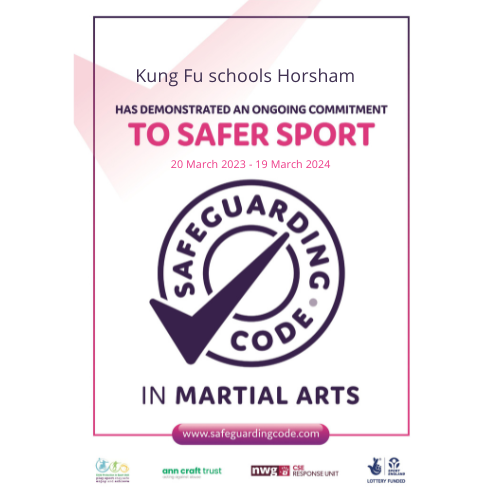
For families, safeguarding and age-appropriate teaching should sit alongside martial arts knowledge. Toddlers need play based activities that develop movement, listening and sharing. Primary-age children need structure, encouragement and clear consequences. Teenagers need respect, challenge and a place to build independence. Adults need room to learn at their own pace without being made to feel out of place.
Positive reinforcement also matters. Praise should be specific and genuine: good focus, thoughtful effort, improved control, respectful behaviour. When students understand what they have done well, they can repeat it. When they know what to practise next, they can improve without losing heart.
The most meaningful confidence is not a performance. It is the steady belief that you can face a challenge, behave with respect and keep moving forward when something feels difficult. Whether a student is taking their first steps in Tiny Tigers, preparing for a grading or returning to exercise as an adult, that belief is worth building one class at a time.